Lead time depends on complexity, material and volume. Simple parts may move quickly through programming and machining, while multi-axis components with tight tolerances require more setup and inspection time.


Manufacturing leaders face unique pressures to build components that must work the first time, survive harsh environments and perform reliably in the field. Every tolerance matters, and even slight delays or remakes cost time and money. A machining partner is integral to your success when you work with mission-critical hardware.
CNC machining is one of the most trusted methods for producing precision components used in aero-defense programs, rocket engines, space systems and other high-performance environments.
CNC stands for computer numerical control. It is a subtractive manufacturing method, meaning the machine removes material from a solid block to create a component. These machines eliminate the need for manual guidance, precisely following computer-generated instructions down to the micron level.
This shift from manual machining to CNC wasn’t only a technological upgrade — it changed what modern manufacturing could achieve. What once depended heavily on operator skill is now programmable, repeatable, trackable and scalable with consistent accuracy. The process eliminates guesswork and delivers repeatability. When tolerances are tight, it provides the consistency that separates a functioning component from one that fails in the field.
To fully understand CNC machining, it helps to view it as a workflow. Each stage has a purpose that builds toward quality control and final performance.
Engineers begin by creating a computer-aided design file that defines the part’s shape, dimensions, tolerances and surfaces. It becomes the blueprint the machine will follow.
Next, computer-aided manufacturing software converts the CAD file into toolpaths. Workers define the machining strategy during this step, programming feed rates, tool selection, cutting direction and spindle speeds for efficiency and accuracy.
Skilled machinists perfectly position everything before cutting begins. They secure material to the machine bed, check the alignment and recalibrate equipment as needed.
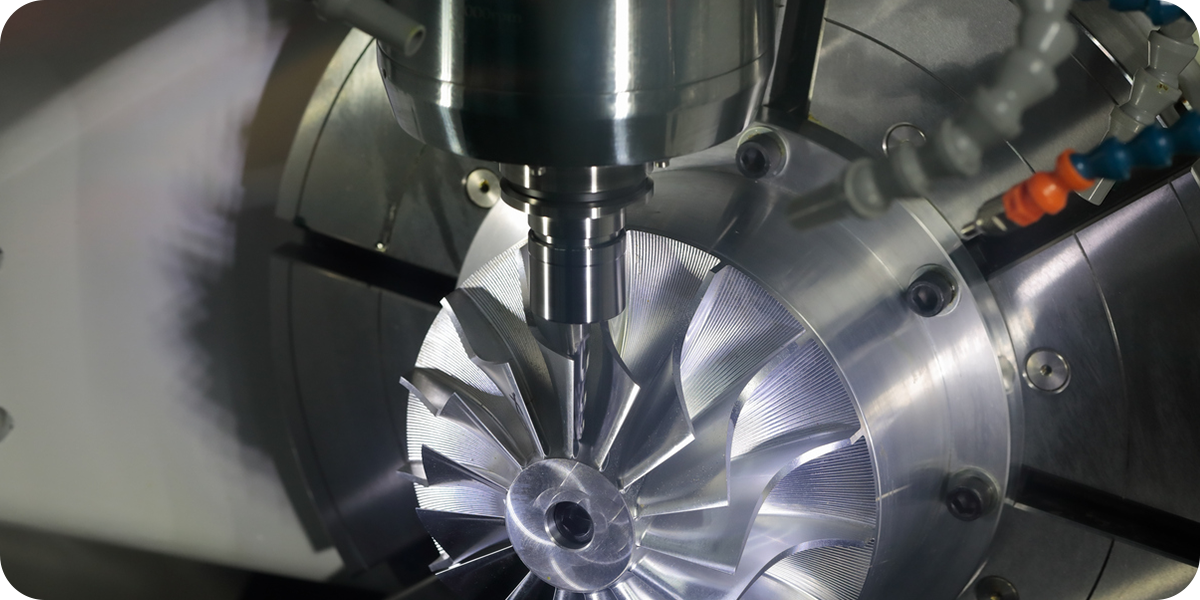
Cutting tools start removing material layer by layer. Depending on the feature, the machine may mill, drill, turn, bore or tap. Coolant flows to manage heat, tools change automatically and the machine executes every command from the digital code.
Finished parts undergo measurement and verification. Surface tests and tolerance checks confirm the component meets exact specs. For defense-grade work, this step is strict, fully documented and nonnegotiable.
Various machines serve distinct functions. The right equipment ensures manufacturing efficiency and maintains tolerance stack-up for complex assemblies.
CNC mills use rotating cutting tools to remove materials from a stationary part. They’re ideal for pockets, slots, contours, drilled holes and 3D geometries. Multi-axis milling unlocks more freedom and reduces part repositioning.
A workpiece that rotates while the tool cuts is perfect for cylindrical parts like shafts, nozzles, housings, pins and threaded features. Modern turning centers often combine milling and drilling capabilities within one machine.
Additional CNC equipment is vital in finishing accuracy, shaping complex features and meeting the high standards required in defense and aerospace manufacturing. These machines expand capability, improve efficiency and ensure every component meets performance expectations.
Manufacturers use a few supporting tools alongside CNC milling and turning.

Beyond cutting material, precision manufacturing prioritizes repeatability, reliability and engineering confidence. CNC machining excels in environments where those qualities are paramount.
Capabilities for high-performance components include the following.
Material performance is equally critical. CNC machining supports standard and advanced materials such as stainless steels, high-strength steel alloys, nonferrous alloys, nickel-based alloys, molybdenum-rhenium, composites, brass, copper, bronze, Teflon and polypropylene.
These materials provide excellent temperature resistance, durability, corrosion protection and mission-ready performance.
Not all machining partners deliver the same outcome. Engineers evaluating quotes often compare cost, speed and capability, but those variables only matter if the part meets performance expectations.
These qualities are worth prioritizing.
Get your pressing questions on CNC machining answered.
Lead time depends on complexity, material and volume. Simple parts may move quickly through programming and machining, while multi-axis components with tight tolerances require more setup and inspection time.
Yes. CNC machining is highly suitable for prototypes and short-run development. It enables engineers to refine designs before scaling them up for full production. This flexibility reduces engineering risk and ensures components meet all performance requirements before ramping up volume.
CNC machining becomes increasingly cost-effective where accuracy, repeatability and performance matter. While advanced machining may have a higher initial cost than manual machining, it prevents downstream issues, reduces scrap and ensures reliable assembly fit. Long-term, this reduces time and risk in builds.
CNC machining provides the accuracy, repeatability and trust required for modern defense and space hardware. Understanding the process helps engineering leaders make informed decisions, balance cost with capability and select partners who are capable of delivering mission success.
Thaler Defense Systems supports aero-defense programs with advanced CNC machining and system-level manufacturing solutions. With expertise in complex geometries, high-strength alloy machining and volume production, we help OEMs reduce risk, accelerate build schedules and maintain quality throughout every phase of development. Contact us today to discuss components and explore our machining capability options.